
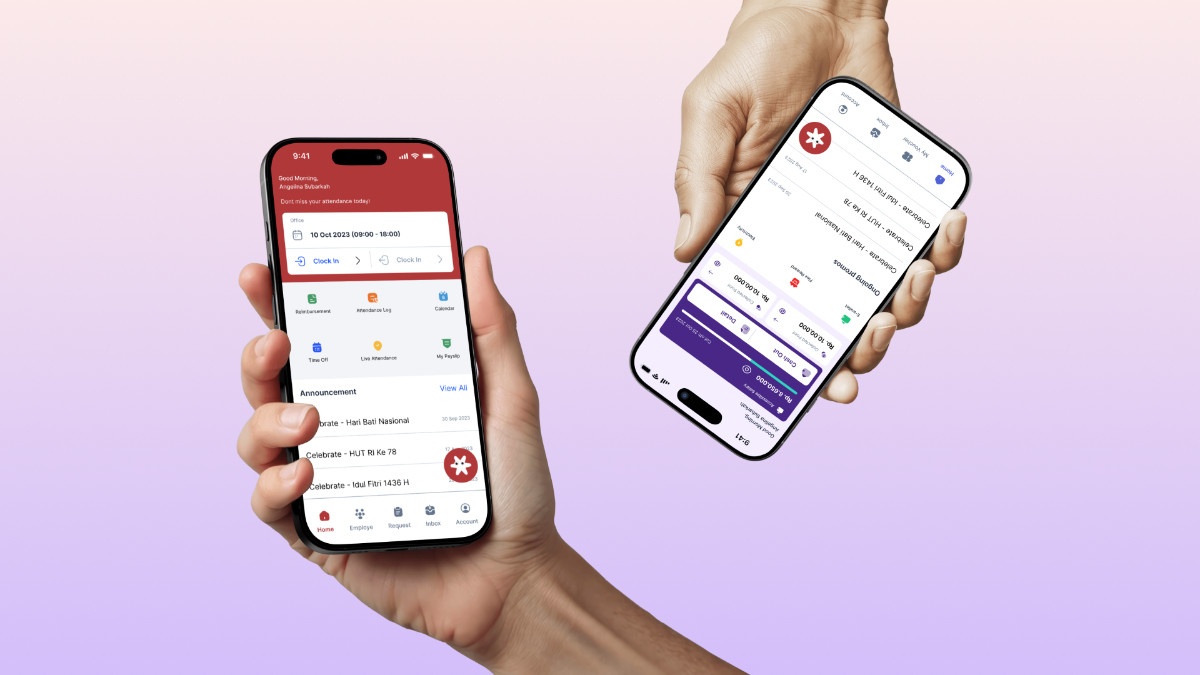
In this case study, I explored how Mekari Talenta and Mekari Flex could better support employee work‑life balance and mental wellness. In today’s fast‑paced work environment, many employees struggle to maintain healthy boundaries between work and personal life, leading to issues such as burnout, anxiety, and sleep disturbances. As a Product Designer, my goal was to leverage existing Mekari products and current technology to design features that encourage healthier habits, improve self‑awareness around mental health, and create a more supportive employee experience.
The central challenge was to understand how employees currently experience work‑life balance and mental health, then translate those insights into practical, product‑driven solutions within Mekari Talenta and Mekari Flex. From secondary research (WHO, Indonesian Ministry of Health, Riskesdas, SAKERNAS, and commuter statistics) and a primary survey of 71 respondents, several key problems emerged: many employees work beyond the standard 40‑hour week, a significant portion report burnout, anxiety, and sleep problems, and commuting increases stress. At the same time, many companies do not provide sufficient mental health resources, while flexible hours can unintentionally encourage side hustles and longer work time. Based on these findings, I defined three core problem statements:
- How might we create reminders tailored to individual preferences to encourage employees to take healthy breaks?
- How might we help employees self‑diagnose more effectively and improve their self‑treatment strategies?
- How might we reward employees for achieving positive milestones in order to boost their mood and motivation?
Working within a limited time frame and without direct access to actual Mekari users, I scoped the work to research, definition, ideation, and design/prototyping, leaving user testing, development, and iterations for future phases.
Research
Gathered secondary data (WHO, Riskesdas, SAKERNAS, commuter stats) and ran a survey with 71 respondents to understand how work hours, commuting, and company policies affect employees’ work‑life balance and mental health.
Define
Synthesized the findings into key insights and translated them into problem statements around break reminders, self‑diagnosis and self‑care, and rewarding healthy behavior, while also outlining relevant user personas.
Ideation
Generated solution concepts Take a Break reminder system, AI chat assistant, and a reward system then mapped their user flows based on impact, feasibility, required resources, and integration with Mekari Talenta and Mekari Flex.
Design
Created low‑fidelity wireframes for each key flow and then refined them into high‑fidelity screens using the Mekari design system to ensure consistency with existing products.
Prototyping
stitched the high‑fidelity screens into interactive prototypes in Figma, enabling stakeholders to experience core journeys such as setting break reminders, chatting with the AI assistant, and claiming rewards through Mekari Flex.
To address the problem statements, I designed three core solution concepts integrated into Mekari Talenta and Mekari Flex:
- A “Take a Break” reminder system, using configurable push notifications so employees can set break reminders that fit their working style.
- An AI chat assistant that employees can use for light counseling, mental‑health‑related check‑ins, and HR support, lowering the barrier to seeking help.
- A reward system that connects Talenta’s clock‑in/clock‑out data with Mekari Flex, allowing employees to earn and redeem points when they maintain healthy behaviors and reach certain milestones.
I mapped key user flows for each solution, created low‑fidelity wireframes, and then translated them into high‑fidelity designs using Mekari’s design system, ensuring visual and interaction consistency with existing products.
From this case study, my main learnings were:
- The user perspective and research depth were still limited. I mainly relied on surveys and did not have direct interaction with actual Mekari Talenta and Mekari Flex users, which would be essential for deeper validation.
- A broader mix of research methods (e.g., user interviews, usability testing) is needed to strengthen and refine the hypotheses.
- I identified the need to improve how I synthesize and summarize research findings, so insights can be more focused and actionable.
- Collaboration with engineers and product managers is critical early on, especially to discuss AI integration feasibility and how tightly Talenta and Flex can be connected.
Overall, this project showed that even small, well designed features such as personalized break reminders, supportive AI assistance, and meaningful rewards can become an entry point for Mekari Talenta and Mekari Flex to contribute to better work‑life balance and mental wellness for employees.